




Sustainability of Water Treatment
Conscious disposal and reuse, with the strength of the Group
Wastewater treatment is an everyday practice of circular economy, benefiting the environment and communities. Over the years, we have selected technologies that are low in energy use and suitable for water reuse in different sectors. In addition, as part of Axius Water, MITA Water Technologies has adopted a Shared Sustainability Overview. The focus: protecting the environment and developing innovative solutions through precise numerical monitoring.
1. Our vision
MITA Water Technologies’ commitment aligns with European Union and United Nations goals on sustainability and circular economy, particularly in the context of wastewater treatment.
- Reducing environmental impact: our production processes are optimized to minimize energy consumption and the emission of pollutants, contributing to the EU goals of “zero pollution” by 2050.
- Promotion of the circular economy: this is through solutions that promote the reuse of wastewater, reducing water withdrawals from natural resources and minimizing discharges. This is in line with Regulation (EU) 2020/741 to promote the safe reuse of purified urban wastewater.
- Development of cutting-edge technologies: we invest in research and development of innovative water treatment solutions that are increasingly efficient and sustainable. In this way we support the goals of the UN 2030 Agenda, in particular Goal 6, to support the availability and sustainable management of water for all.

2. Sustainable water disposal and reuse
The first goal of any sewage treatment plant, municipal or industrial, is the sustainable and appropriate disposal of treated water. The two focuses: environmental protection and human safety. In recent years, with increased awareness of the scarcity of the “blue resource” on Earth, there has been much more emphasis on its reuse in plants and in civilian life.
The benefits of wastewater reuse include:
- Water savings: reduction of water withdrawals from natural resources, contributing to EU goals for more efficient and circular wastewater management.
- Reduced environmental impact: decreased pollutant discharges to waterways, in line with the EU Action Plan “Towards Zero Pollution for Air, Water and Soil.”
- Economic efficiency: reduction of costs associated with wastewater treatment and disposal, promoting a more sustainable economy.
Our pile cloth filters are particularly suitable for reuse in different areas: urban water, industrial plants, agricultural sector. Due to their high filtration efficiency, they allow obtaining outlet water with suspended solids concentration below 10 mg/l, thus widely reusable in numerous processes.
Tell us your needs3. Adherence to Axius Water's Sustainability Overview
The Axius Water Sustainability Overview entitled “Stopping Nutrient Pollution TOGETHER” offers a deep dive into the achievements around sustainable operations across the Axius Water businesses in 2024. This is the fifth issue to be released since Axius inception in 2019.
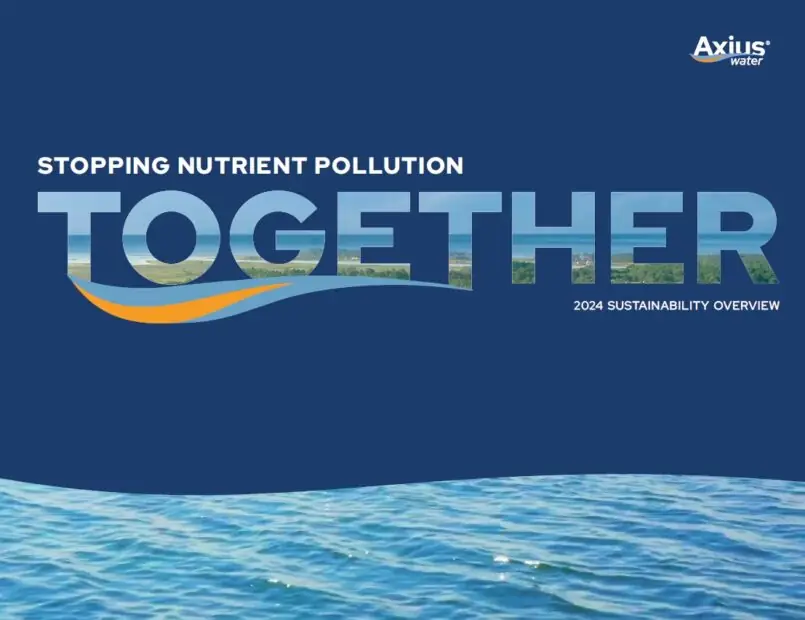
Key impact highlights include:
- ~90 million kilograms of nutrients removed from water by clients using our products
- 1 new company added, for a total of 7 Axius Water companies
- 51% employee net promoter score (eNPS)
- 18% top-line growth
- 1,015,310 kWh of electricity offset by renewable energy credits (RECs), accounting for 100% of electricity use in North America
- 27% decrease in Scope 2 emissions
Resources
Needs of wastewater treatment
Discover the solution for all needsComparing different technologies
Find out all the different technologiesFind out more
All technical articlesTools to help you choose
Our support throughout the product life cycle
A sustainable and efficient solution for every industry and need
Our Newsletter
Sign up for the MITA Water Technologies newsletter: stay up-to-date on systems for municipal and industrial wastewater treatment and filtration.